IPTV vs cable vs streaming: which is right for you in 2026?
 By Yanis Moreau, IPTV & Streaming Editor Last updated
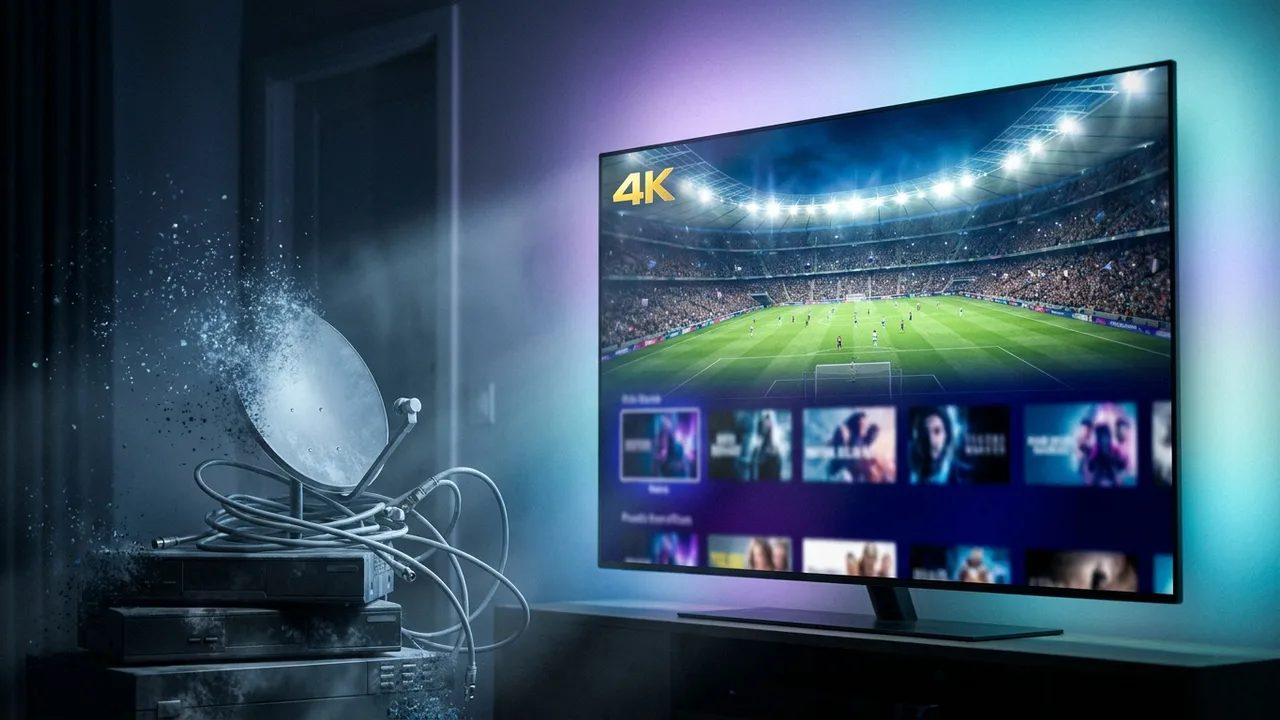
In 2026, IPTV is the cheapest way to get thousands of live channels and a large on-demand library in one place — typically €4–10 per month with no contract, versus €30–50 for cable/satellite. Cable still leads on guaranteed local reliability; streaming services (Netflix, Disney+ and the like) win on exclusive originals but don’t give you live national TV or full sport. This guide compares all three on cost, channels, live sport, flexibility and quality, so you can pick the right mix for your home.
Quick answer: what each one is best at
- IPTV — best value for live TV + sport + a big VOD catalogue, on any device, no contract.
- Cable / satellite — best for guaranteed local reliability and a familiar single-box setup, at a premium price and with a contract.
- Streaming services — best for exclusive on-demand originals; not a replacement for live national TV or full sports coverage.
Cost comparison
Price is where the gap is widest. These are indicative 2026 figures to show the order of magnitude:
| Option | Typical cost / month | Contract | Extra hardware |
|---|---|---|---|
| IPTV subscription | ≈ €4–10 | None | None (uses your devices) |
| Cable / satellite | ≈ €30–50 | Often 12–24 months | Box / dish (often rented) |
| 2–3 streaming services | ≈ €25–45 | Monthly | None |
Over two years, IPTV can cost several hundred euros less than cable — and unlike stacking multiple streaming subscriptions, everything lives in one app. See our full IPTV pricing breakdown.
Channels & content
| What you get | IPTV | Cable | Streaming |
|---|---|---|---|
| Live national channels | ✓ 20,000+ | ✓ (your region) | ✗ |
| Live sport & PPV | ✓ Broad | ± Often extra cost | ± Limited |
| Movies & series on demand | ✓ 60,000+ | ± Small library | ✓ Curated |
| International channels | ✓ 50+ countries | ✗ | ± |
| 4K / HD | ✓ Where available | ✓ | ✓ |
Flexibility & setup
IPTV works on the device you already own — Fire Stick, Apple TV, Android TV, Smart TV, phone or computer — and is ready in minutes, with no engineer visit and no dish. Cable ties you to a box, a contract and (often) a specific address. Streaming apps are flexible but each one is a separate subscription and login.
Reliability & picture quality
Cable’s advantage is a dedicated line, so it’s steady regardless of internet load. IPTV quality depends on your connection and your provider’s servers: on a solid line (10 Mbps HD / 25 Mbps 4K) with a properly sized provider, it’s smooth even during peak-hour sport. The weak point of cheap IPTV is buffering at peak times — which is exactly what a serious provider engineers against. The buffering checklist covers this.
Who should choose what?
- Want the most channels and sport for the least money? IPTV, and keep one streaming service if you love its originals.
- Value a single guaranteed-reliable box and don’t mind paying more? Cable/satellite.
- Only watch on-demand box-sets? Streaming services alone may be enough.
Frequently asked questions
Is IPTV cheaper than cable?
Yes — an IPTV subscription usually costs about €4–10 per month billed yearly, versus roughly €30–50 for a cable or satellite package. IPTV also has no long contract, so the effective cost gap is even larger over two years.
Is IPTV better than streaming services like Netflix?
They do different jobs. Streaming services are on-demand libraries; IPTV gives you thousands of live channels — national TV, news and live sport — plus a large on-demand catalogue. Many households use IPTV to replace cable and keep one streaming service for exclusive originals.
Do I need special hardware for IPTV?
No. IPTV runs on a device you already own — Smart TV, Fire Stick, Apple TV, Android box, phone or computer — over your normal internet connection. No dish, no cable box.
What internet speed do I need?
About 10 Mbps for HD and 25 Mbps for 4K, per stream. A wired (Ethernet) connection gives the steadiest picture during peak-hour sport.